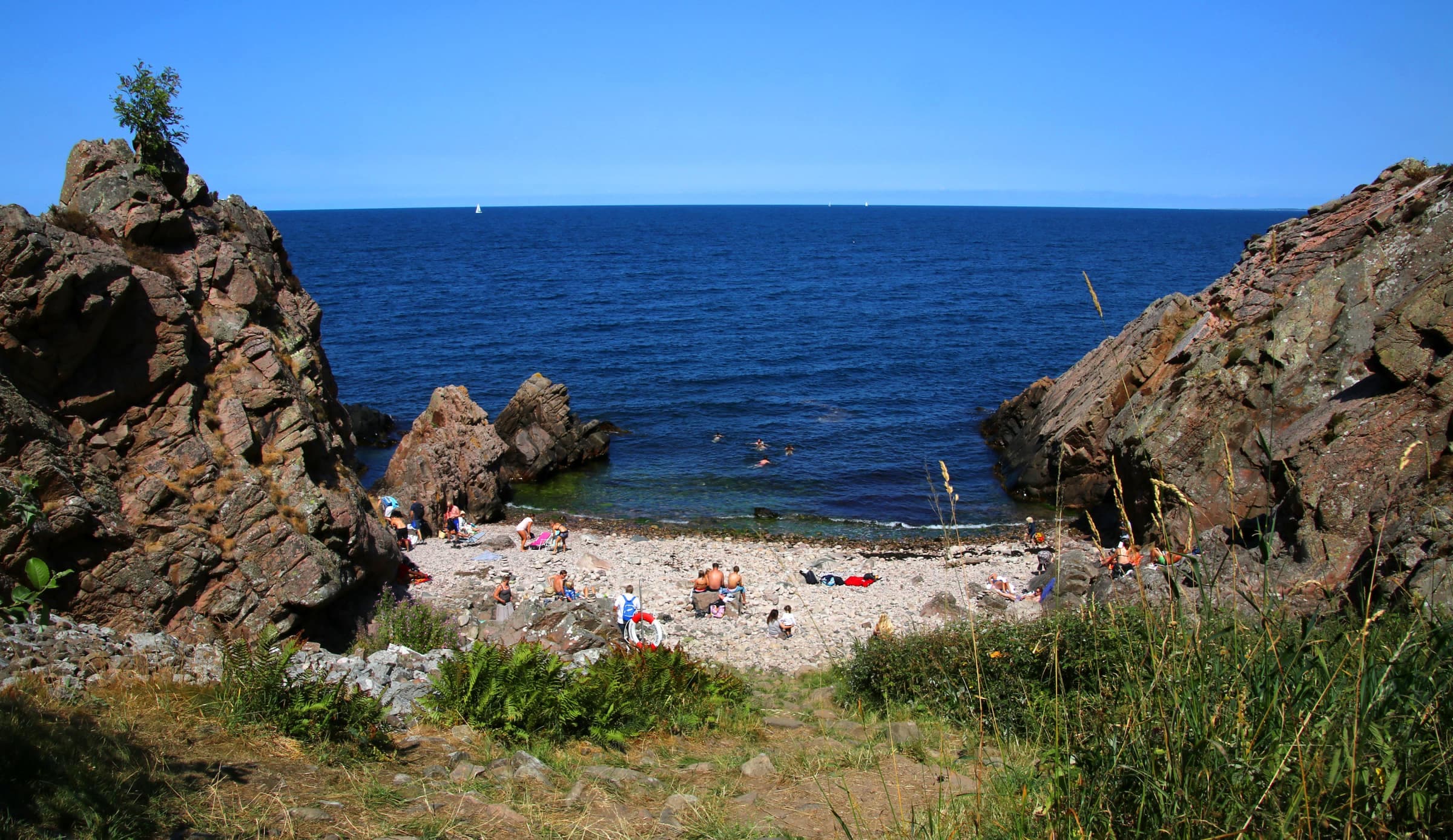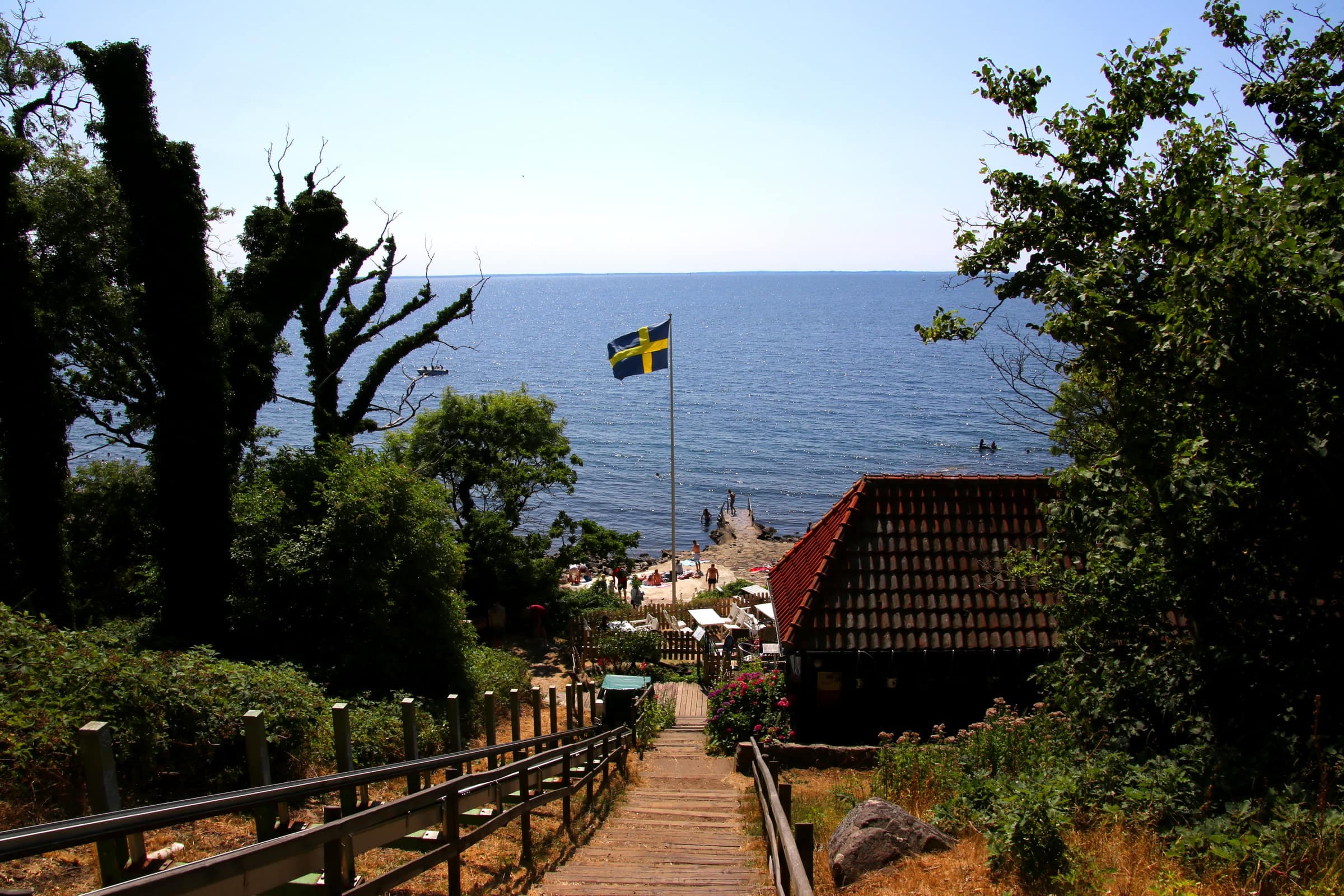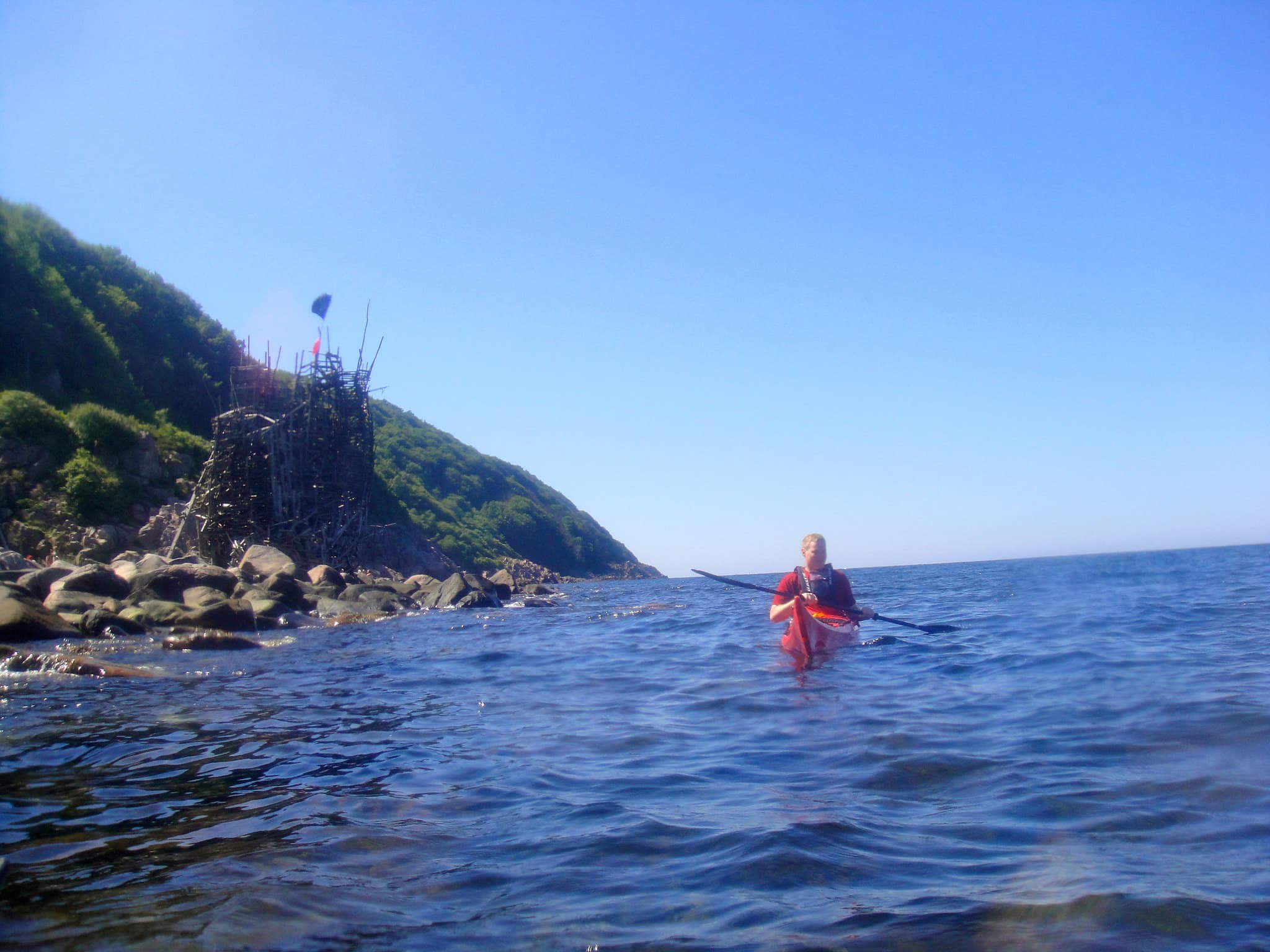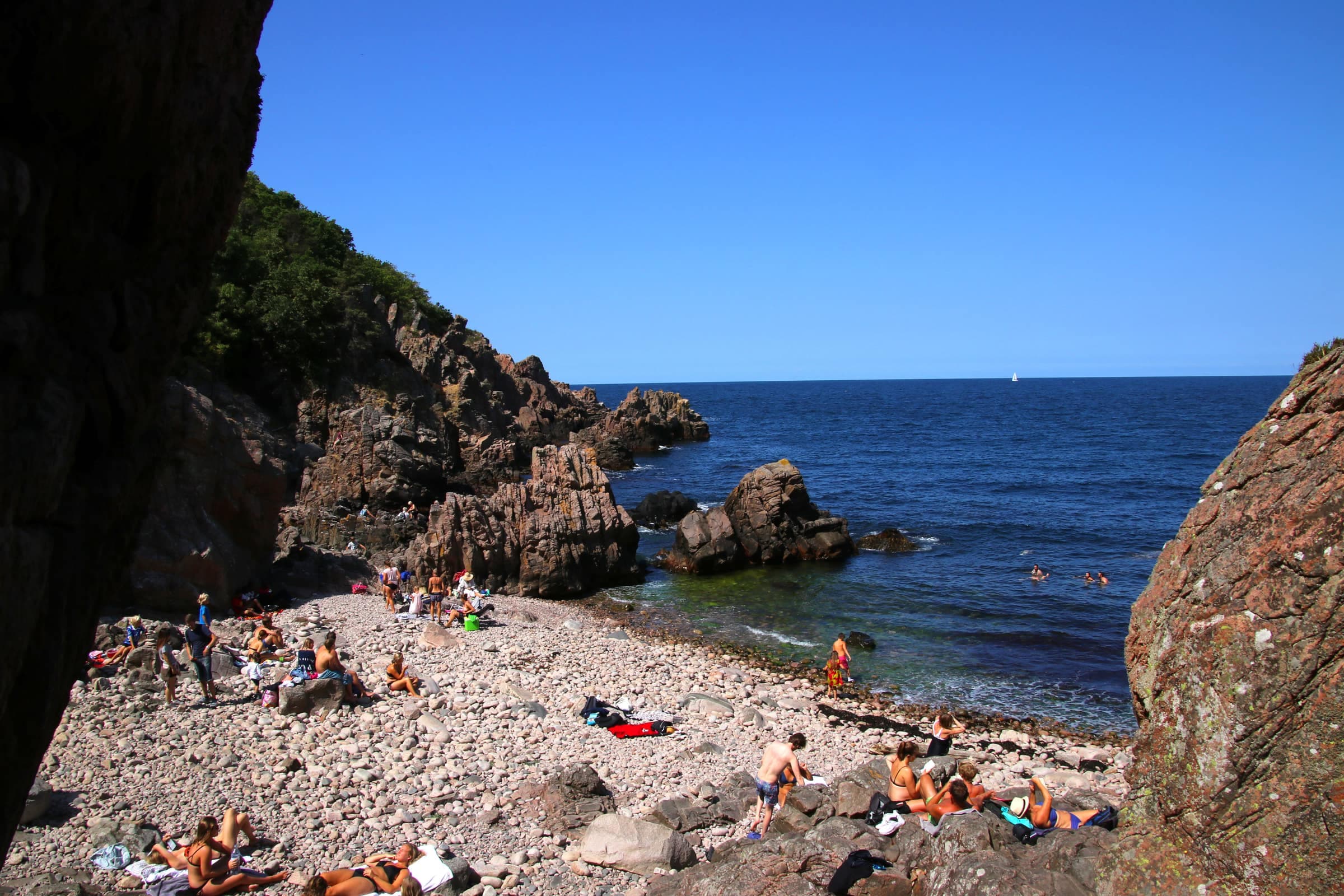
Kullaberg is among the most popular dive areas in southern Sweden. Rock walls drop straight into the sea, and a tongue of saltier water that reaches the coast here supports rich life: dead man's fingers, anemones and, below about 12 m, lobsters.
Kullaberg's cliffs drop straight into the sea
Photo: Moralist · CC BY-SA 4.0Rock formations along the shore at Josefinelust
Photo: Helle Krog · CC BY 3.0Looking out to sea from inside Lahibiagrottan, with the islet Primön just offshore
Photo: David Castor · CC0Dive sites
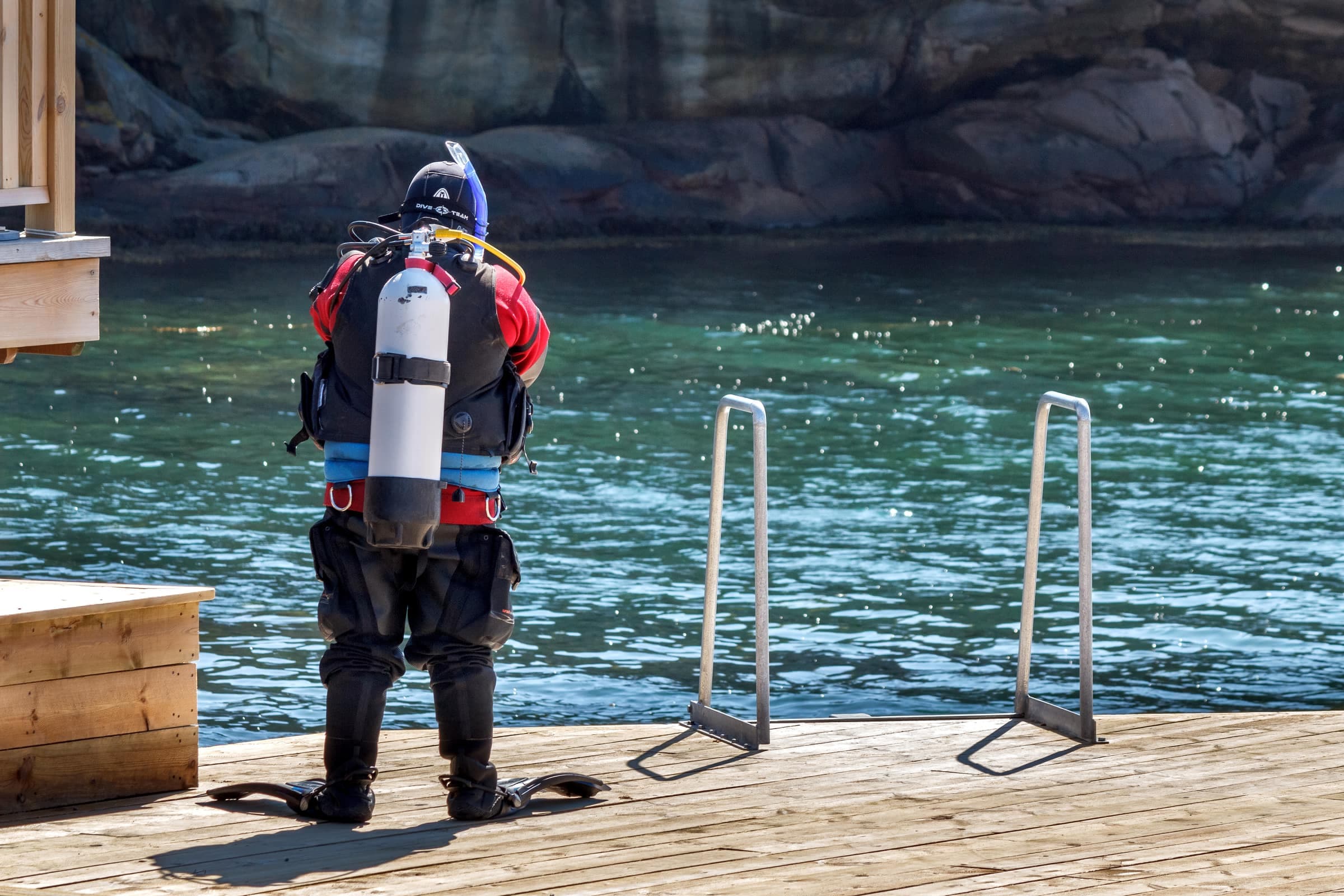
About a dozen sites ring the headland, half of them reachable from shore. Ablahamn on the north side is among the most visited, with an underwater wall, a small cave and a maximum depth around 24 m. Josefinelust slopes gently to 20–22 m and sees fewer divers, so its life is less disturbed. Few sites go deeper than 25 m.
Snorkeling
On calm days the sheltered bay at Ablahamn is good for snorkeling. Local guides offer snorkeling from Mölle harbor, and coasteering trips on the north side include it too.
Rules and safety
The nature reserve extends into the sea. Don't pick attached seaweed or take bottom-dwelling animals, and leave wrecks alone. Some areas are closed to boats from 1 March to 15 July. The coast is exposed to north and west winds, so check the forecast before you go in.